
Rolled your ankle on the netball court, the footy field or a kerb on Maitland Road? Ankle sprains are one of the most common sporting injuries, and the right rehab early on is what stops a single sprain turning into a repeat problem. Our physiotherapists work out exactly which ligaments are involved, get you moving safely and rebuild the strength and balance you need to get back to sport and work.

The Physio Joint is based at Suite 204, 2nd Floor, 161 Maitland Road, Mayfield. We see people with ankle sprains from Mayfield, Mayfield East, Mayfield West, Waratah, Tighes Hill, Carrington, Islington, Hamilton and across Newcastle.
If your pain has built up over time rather than from a single roll, such as heel, arch or Achilles pain, see our foot and ankle pain page.
An ankle sprain happens when the ligaments that hold the ankle steady are stretched or torn, usually after rolling, twisting or landing awkwardly. Not all sprains are the same.
The most common type. The foot rolls inwards and the ligaments on the outside of the ankle take the strain. Swelling and bruising around the outer ankle bone are typical.
These involve the ligaments above the ankle joint, between the two shin bones. They often follow a twisting injury in contact sport and can hurt most when you push off or rotate on the foot.
If the same ankle keeps rolling or feels like it might give way, the ligaments and the muscles that protect them have not fully recovered. This is where targeted strength and balance work matters most.


If you cannot put any weight on the foot, or the ankle looks out of shape, go to a GP or emergency department first.
We check which ligaments are involved, how much movement and strength you have, and how the ankle behaves when you walk, balance and load it, so the plan fits your injury rather than a generic protocol.
Early on, the aim is to calm the ankle down while keeping you moving. Hands-on treatment, taping or bracing advice and simple movement work help you get around comfortably.
We progress calf, ankle and hip strengthening alongside balance training, because the ankle relies on both to stay steady on uneven ground. Where muscle tightness is part of the picture, we may combine this with dry needling or massage therapy.
Before you go back, we test the things sport actually asks of your ankle: hopping, landing, changing direction and running. You return in stages, so you know the ankle is ready.
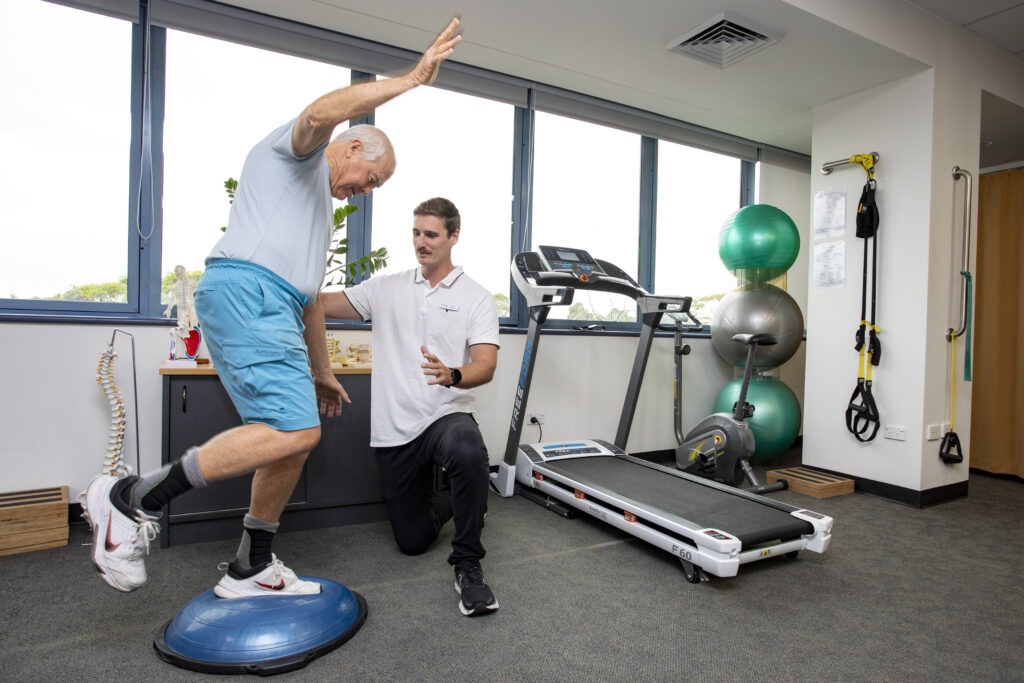

Recovery depends on how severe the sprain is. Mild sprains often feel better within a few weeks, while moderate sprains and high ankle sprains take longer. Pain settling is not the same as being recovered. The ankle also needs its strength and balance back, which is why people who skip rehab so often roll the same ankle again.
If the same twist has also left your knee sore, see our knee pain page.
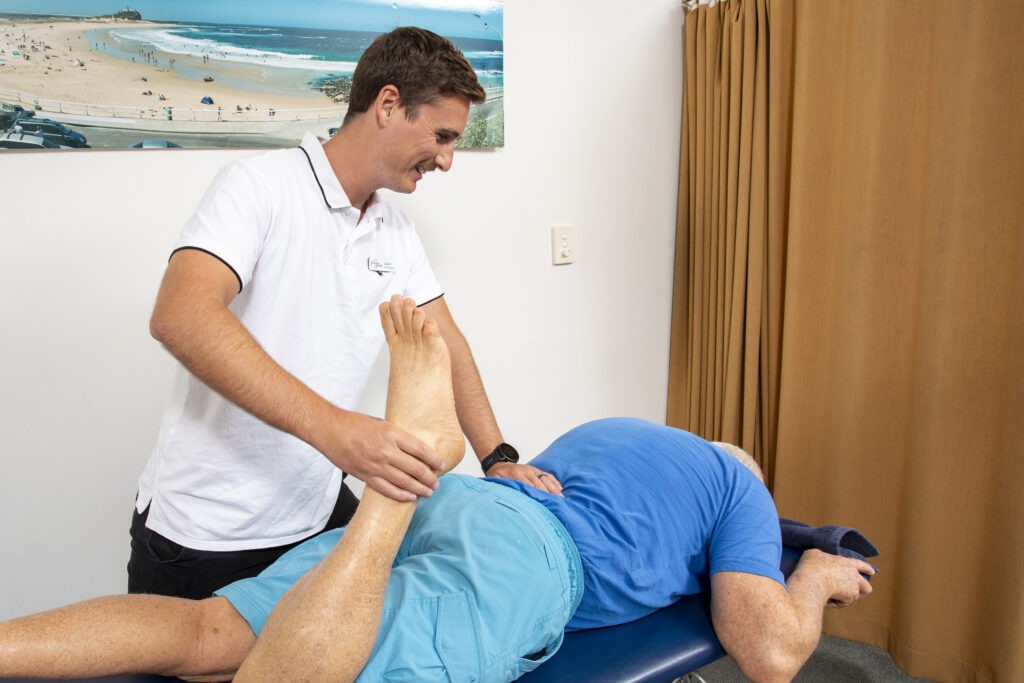
If you cannot take any weight on the foot, or the ankle looks out of shape, get urgent medical care. For most sprains, a physio assessment is the right next step and can be booked directly with us.
No. You can book an appointment with us directly.
A short period of protection helps, but staying completely off it for too long slows recovery. We will show you how much movement is right for your ankle at each stage.
Sometimes, particularly in the early stages or when you return to sport. We will tell you whether it will help your ankle and for how long.
Repeat sprains are usually a sign that strength, balance or control around the ankle has not been fully rebuilt. A proper rehab programme addresses this directly. Our foot and ankle pain page covers chronic ankle instability in more detail.
That depends on how the ankle is moving and how it copes with load. We will guide you on when to return and what to do until then.
Don’t leave a rolled ankle to sort itself out. Book an assessment with The Physio Joint at 161 Maitland Road, Mayfield, and get a clear plan to get you back on your feet.
We and our partners, including Google, use cookies and personal data to analyse traffic and for ads personalisation and measurement. You can accept, reject or choose which cookies to allow. Privacy Policy • Cookie Policy • Terms & Conditions • Google Privacy
We use cookies to help you navigate efficiently and perform certain functions. You can choose which categories to allow below. Cookies categorised as Necessary are always active.
We also use third-party cookies for analytics and advertising. These are only stored with your consent. You can update or withdraw consent at any time via the cookie icon at the bottom-left. This site operates under UK GDPR, the Data Protection Act 2018, and the Privacy and Electronic Communications Regulations (PECR). Cookie Policy • Privacy Policy
Necessary cookies are required for core site features including security, network management, and consent storage.
| Cookie | Duration | Description |
|---|---|---|
hmdg_cookie_consent | 180 days | Stores your cookie consent preferences. |
PHPSESSID | Session | WordPress session identifier. |
wordpress_logged_in_* | Session | WordPress login authentication. |
Functional cookies enable enhanced features such as live chat and remembering preferences.
| Cookie | Duration | Description |
|---|---|---|
wp-settings-* | 1 year | Stores user interface preferences. |
Analytics cookies help us understand visitor behaviour. Controls analytics_storage for Google Analytics 4.
| Cookie | Duration | Description |
|---|---|---|
_ga | 2 years | Google Analytics — distinguishes users. |
_ga_* | 2 years | Google Analytics 4 — session persistence. |
_gid | 24 hours | Google Analytics — distinguishes users. |
_gat | 1 minute | Google Analytics — throttles request rate. |
Performance cookies collect aggregate, anonymous data about site performance.
| Cookie | Duration | Description |
|---|---|---|
_gat_gtag_* | 1 minute | Google Tag Manager — rate throttle. |
Marketing cookies track visits to deliver relevant ads. Controls ad_storage, ad_user_data, and ad_personalization.
| Cookie | Duration | Description |
|---|---|---|
_gcl_au | 90 days | Google Ads — conversion tracking. |
_gcl_aw | 90 days | Google Ads — click attribution. |
_gac_* | 90 days | Google Ads — campaign information. |
IDE | 1 year | Google DoubleClick — ad targeting. |
Powered by HMDG • Cookie Policy